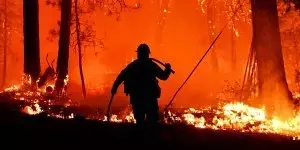
Amidst the raging wildfires that have devastated Los Angeles, the city's fire department is grappling with severe budget cuts and understaffing. The recent Palisades Fire, along with two other blazes, has exposed the vulnerabilities in emergency preparedness and resource allocation, raising critical questions about prioritization in municipal spending.
Facing a Perfect Storm: Underfunded Firefighters Battle Uncontrollable Flames
Battling Blazes Amid Resource Shortages
Less than 12 hours after the Pacific Palisades erupted into flames on Tuesday, the Los Angeles Fire Department (LAFD) made an unprecedented move. High winds fanned the fire’s fury, forcing the department to issue a rare call for all available firefighters, including those off-duty. This urgent summons, not seen in nearly two decades, underscored the gravity of the situation. By January 8, the Palisades Fire remained completely uncontained, alongside two additional wildfires—the Hurst and Eaton Fires—burning through thousands of acres and destroying over 1,100 structures. Five lives have been lost, and tens of thousands have been evacuated.The LAFD faces more than just environmental challenges. A landscape parched by an unusually dry winter, exacerbated by broader climate change trends, compounds the difficulty. Yet, these natural obstacles are not the only hurdles. Budget constraints and resource shortages have left the department ill-prepared for such disasters. Critics argue that the city’s decision to cut the LAFD’s funding while increasing the police budget has dire consequences.Unbalanced Priorities: Funding Disparities Between Departments
In June, Mayor Karen Bass signed a .8 billion budget that slashed the LAFD’s funding by .5 million, or roughly 2% of its previous year’s budget. Meanwhile, the Los Angeles Police Department (LAPD) received a significant boost of nearly 6 million. The LAFD now accounts for only 6% of the city’s expense budget, compared to the LAPD’s 15%. This disparity has raised concerns among activists like Ricci Sergienko, who warned that defunding essential services could lead to dire outcomes. Indeed, as the fires rage on, the city finds itself unprepared, highlighting the potential repercussions of these financial decisions.Impact of Budget Cuts on Operational Capabilities
The most recent LAFD budget reductions included cuts to sworn payroll, operating supplies, and 58 positions. These cuts have severely impacted core operations. For instance, the Fire Prevention Bureau lost six roles and faced reduced overtime hours, leading to incomplete brush clearance inspections—a crucial measure for mitigating fire risks. Fire Chief Kristin Crowley highlighted how these cuts compromise the department’s ability to maintain technology, communication infrastructure, payroll processing, training, and community education. The lack of resources hinders the LAFD’s capacity to respond effectively to emergencies, putting lives and property at greater risk.Police Liability Costs Fuel Budget Deficit
While most city departments experienced cuts, the LAPD’s budget continues to expand. One major factor driving the city’s deficit is overspending on police liability claims. In the first six months of this fiscal year, the city spent more than double its annual liability payouts budget, with the LAPD accounting for over 0 million in legal settlements. Diana Chang, City Controller Kenneth Mejia’s communications director, pointed out that departments either lack accountability for liabilities or are underfunded and understaffed, leading to increased costs. Critics argue that this cycle of funding police misconduct settlements detracts from essential services, creating a never-ending loop of inefficiency and misallocation.Looking Ahead: Balancing Priorities in Future Budgets
As the city grapples with the immediate aftermath of the fires, discussions around future budget allocations loom large. The LAPD has already requested an additional 0.5 million for the 2025-26 fiscal year, an increase of over 8%. Mayor Bass is reviewing this proposal, expected to be unveiled in late April. Advocates urge a reevaluation of priorities, emphasizing the need for meaningful investments in emergency preparedness, wildfire prevention, and climate action. As the impact of this disaster reverberates through the community, it serves as a stark reminder of the importance of balanced resource allocation and proactive planning to safeguard public safety.New

7.4K
222
75
Entertainment

29.7K
2.7K
535
Entertainment

15.1K
1.5K
180
Entertainment



1.7K
132
34
Entertainment



6.7K
535
96
Entertainment





46K
460
197
Finance

43.2K
3.9K
1.2K
Finance

12.7K
1.1K
137
Finance